|
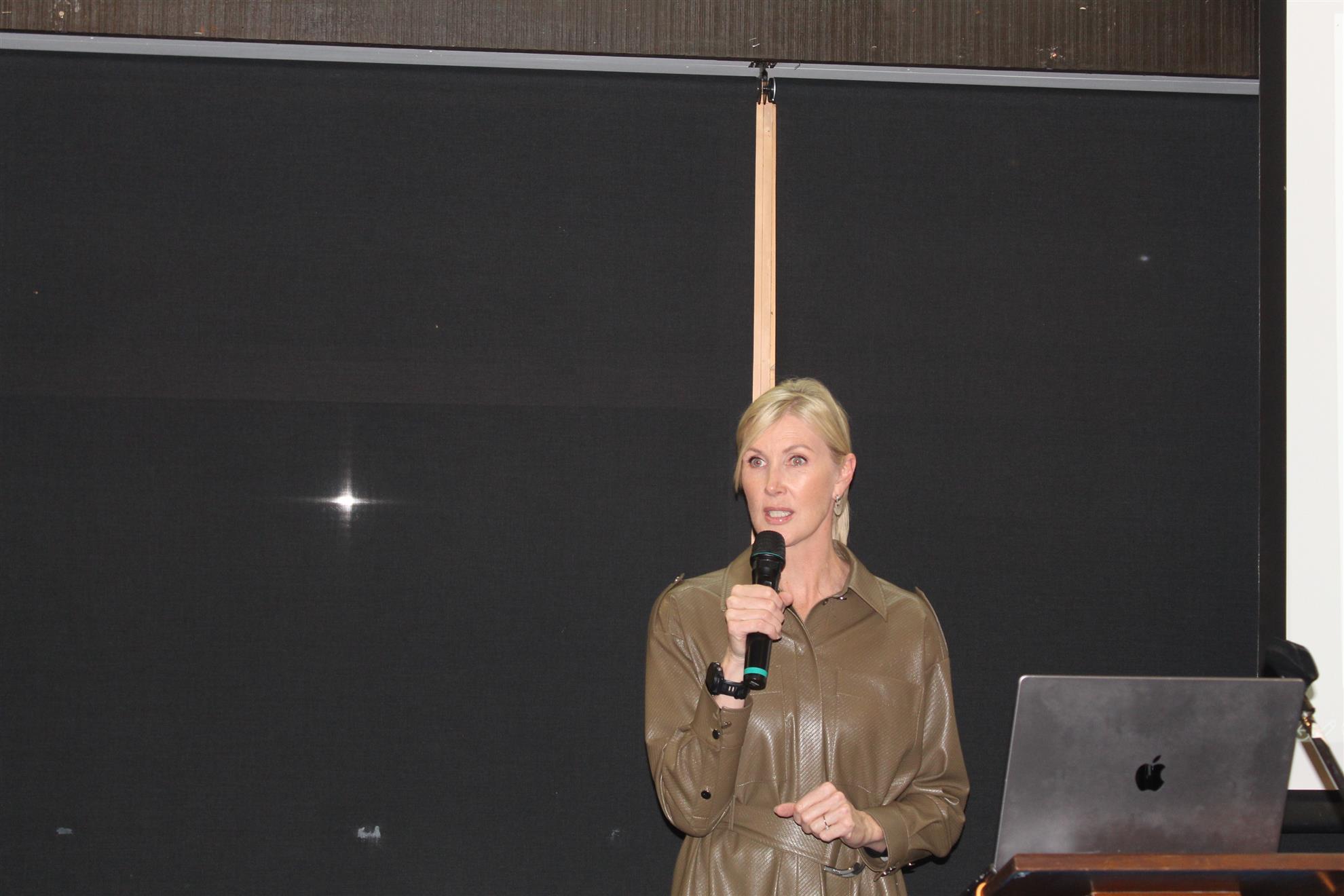
Rachel Smalley Our speaker on Tuesday night was Rachel Smalley
Rachel was introduced to members and guests by Brian McMath.
Rachel has extensive experience in international field reporting and has been a trailblazer in journalism. She has over 25 years of experience in television, including reporting from hostile environments like Afghanistan and Nepal. Rachel has had significant roles outside the media being involved in World Vision's forgotten millions campaign and the medicine gap initiative. Rachel has been recognized for her efforts in raising awareness and funds for spinal injury patients through the Catwalk Trust, co-founded by Dame Catriona Williams. Rachel told us that she started in radio with Paul Holmes and later transitioned to TV3, where she set up their London Bureau. She told us of her experiences covering significant events like the John Key election and Barack Obama's election from London. Rachel then went on to discuss her transition from media to running her own communications consultancy and her involvement in advocating for better access to medicines. ◦ She emphasized the importance of human impact in her advocacy work, particularly in the context of the medicine gap. The main theme of Rachel's address was the Medicine Gap and SMA Advocacy. The medicine gap is shorthand for the gap between medicines funded by Pharmac and those medicines that are not, but perhaps should be. Rachel explains the catalyst for the medicine gap was a phone call from Fiona Tolich about spinal muscular atrophy (SMA) and PHARMAC's refusal to fund its treatment. Rachel told us about her initial research into SMA and her realization of the prevalence and treatability of the disease. A recurring theme in Rachel’s address was the human impact of not funding SMA treatment, sharing stories of affected families and the societal costs of unfunded medicines. She also made the point that funding some of the medicines not presently funded would mean that while initial costs could be considered high, over the lifetime of the patient the cost of early intervention would be, in fact, be low.
She discussed the advocacy efforts that led to a $750 million uplift in government funding for better access to medicines.
Rachel shared a number of stories about children diagnosed with SMA, the impact on children and the societal costs they faced due to the lack of funded treatment. Rachel emphasizes the importance of human stories in driving advocacy efforts and the societal costs of not funding medicines. Rachel talked about the broader implications of the medicine gap, including the need for a modern procurement process and the cost to society of unfunded medicines. Rachel outlined the goals of the medicine gap campaign, including creating public awareness and engaging opposition parties in pre-election polling. She shared a number of stories of various individuals affected by unfunded medicines. In doing so she highlighted the challenges of advocating for multiple conditions and the importance of human stories in shifting government policy. Rachel told us of success of cystic fibrosis advocacy efforts, which led to the funding of the drug trikafta and significant cost savings for the health system. Rachel told us how the cystic fibrosis advocacy efforts, led by Cystic Fibrosis New Zealand, highlighted the significant cost savings of funding trikafta. She talked of the government's response to the advocacy, including the funding of trikafta and the broader implications for PHARMAC's approach to funding medicines. Rachel also spoke of the challenges of engaging mainstream media in the advocacy efforts and the need for specialized reporting on health and medicine. Rachel emphasized the importance of continued advocacy to ensure better access to medicines and improve health outcomes for New Zealanders. Rachel spoke of her dealings with PHARMAC's cultural issues and lack of progress in 1990s-present. By making privacy act applications for information held about her, she uncovered evidence of a cultural issue within PHARMAC, including emails from the CEO and other staff members that revealed a lack of understanding of patients' needs and resistance and active dislike of dealing with troublesome journalists and activists. Rachel told us that her efforts to challenge PHARMAC were met with resistance, including a denial of interviews for two years. It was almost like Pharmac become bound by its own perception of what it was doing and did not consider changing its processes to remain relevant. There was evidence of a combative them and us approach to people such as Rachel that started at the top and moved into the lower reaches of Pharmac. That appears to have changed as Pharmac has been reformed with a new CEO being appointed from outside the entity. In closing Rachel reflected on her personal growth and leadership development through Outward Bound and Rotary, highlighting the impact of these experiences on their life. She told us of her gratitude for the opportunities provided by Rotary and Outward Bound, and hopes to pass on these experiences to her son.
|


 Sponsor Planting Day Invitation