Please remember that some devices will limit the length of the email you see.
Tap the "View Entire Message" to view the whole newsletter.
President's Notes
From Co-President Warwick
Vocationals at Remuera 9 June 2026
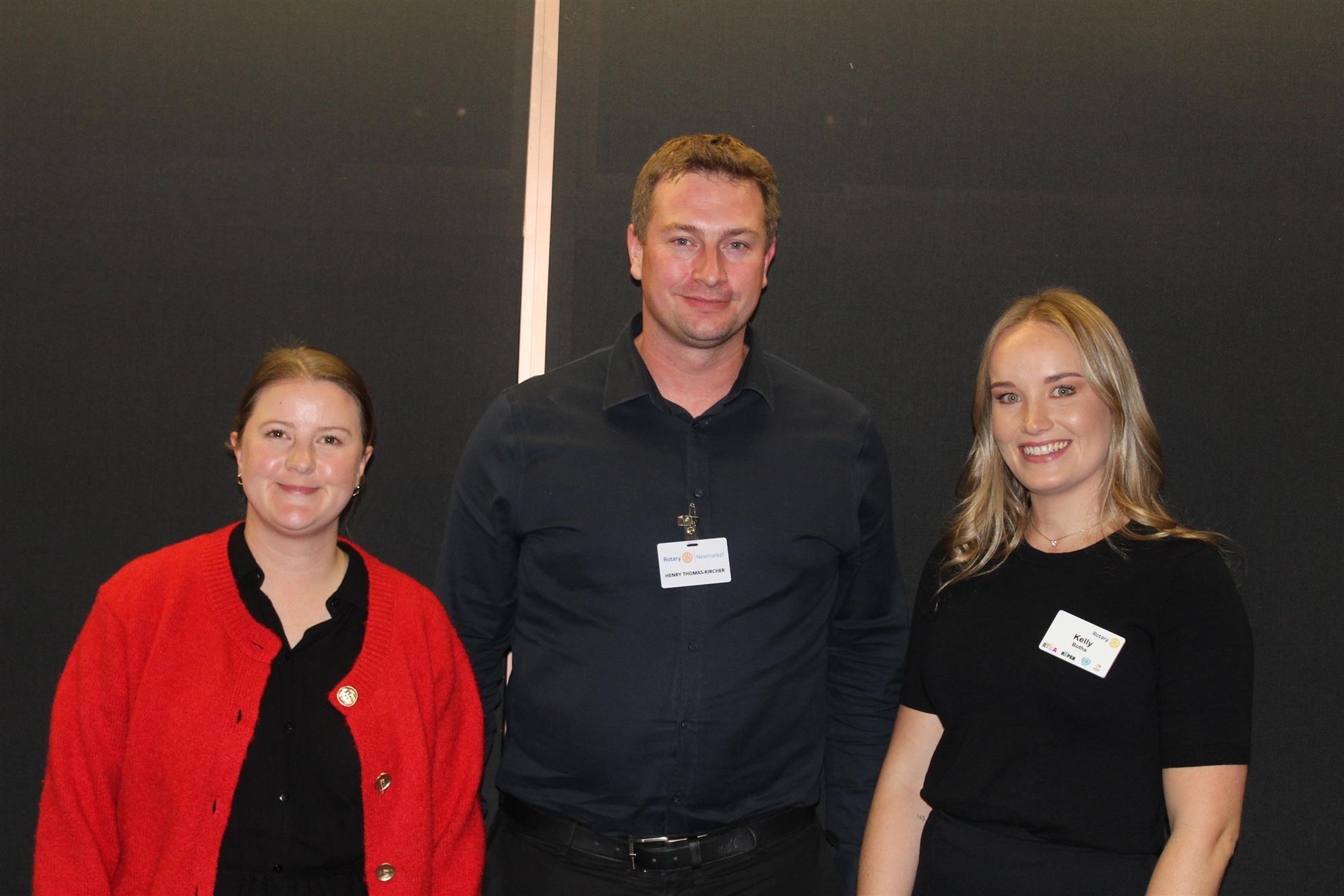
It was great to see so many of our younger members at the meeting on Tuesday, where we heard three of our rising stars relate their personal and career stories.
Henry, Sarah and Kelly represented three of NZ's largest and most important companies in healthcare, energy and water respectively, and all hold down super important roles in their companies, and all clearly contribute significantly to their company's success.
What was really compelling was their tributes to Rotary and RYLA in building their confidence and leadership skills to enhance their careers. Even more so is their desire to give back to Rotary and our Youth Programmes.
This is particularly exciting for our club and for Rotary as a whole as we attract more young members to take bigger roles in the continuance and improvement of our many outstanding youth programmes.
Another thankyou to all who contributed to and participated in a very successful Circus Quirkus. This is our major fundraiser for the year and the smiles and excitement on the faces of the kids and their parents as they leave the arena makes it vso worthwhile.
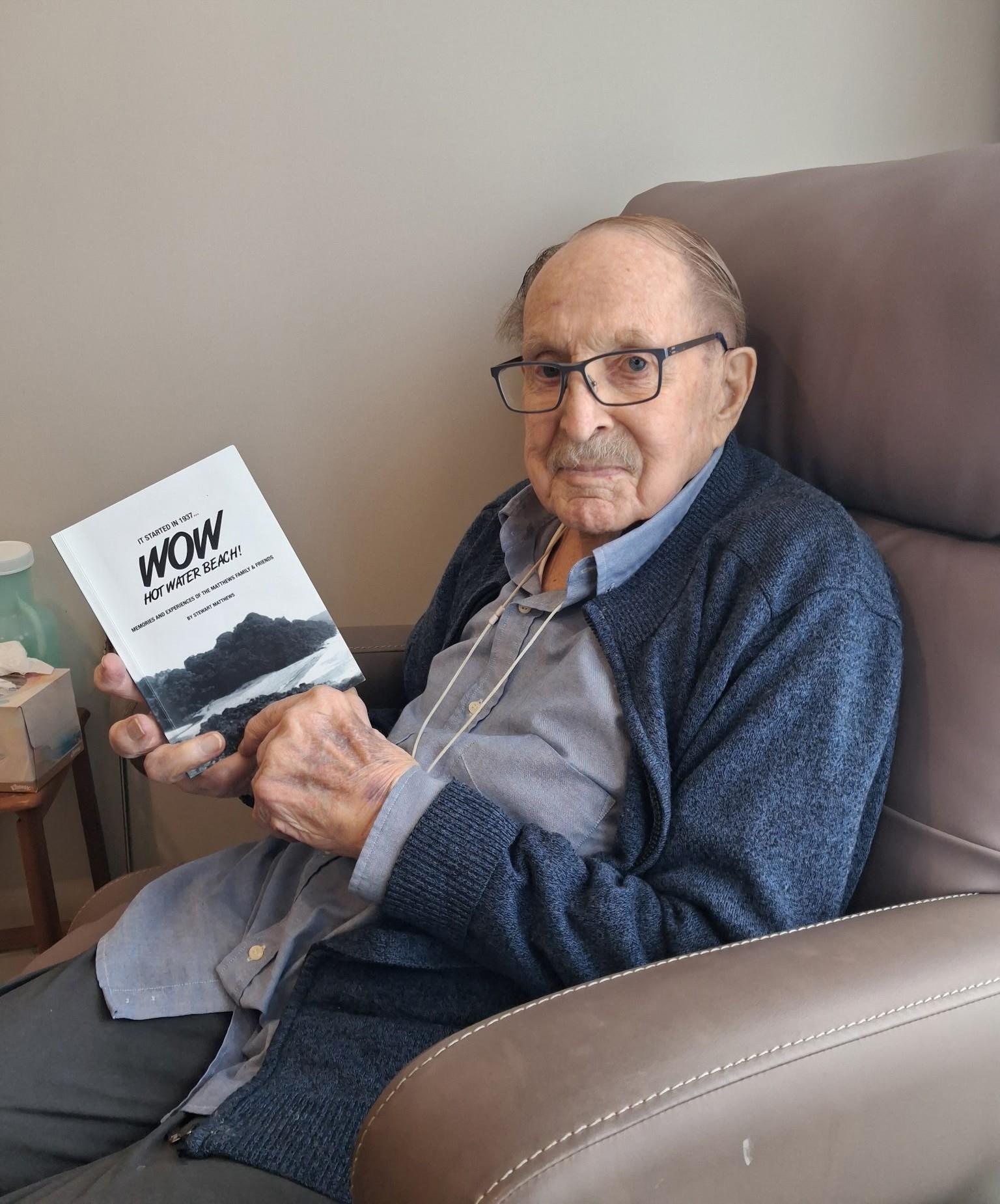
A touching tribute to Stewart Matthews, who passed last weekend, was given by David Jack. It sounded like Stewart was a real character for Penrose Rotary and contributed so much humour and enthusiasm to their meetings and the club.
Changeover is being held on Tuesday 7th July at Remuera Golf Club, with the theme "Starry Starry Night". So look for the invitation coming out soon and start thinking about what to wear! Adding to the attraction of the evening is Murray Thom as our guest speaker, known especially to our younger members as the speaker at RYLA who is majorly interrupted!
Circus Quirkus
A very big thank you to all the volunteers at Circus Quirkus on Sunday: Rotarians, their partners, their kids and their grandkids.
It was one of the best CQ's we've enjoyed, with the almost capacity crowds at both sessions highly vocal and loving it. According to Paul, the Circus MC, these were the best audiences they've experienced over the 25 shows throughout NZ over the past month. Bruce Watson and John Hawke did a superb job of organising the event.
A special thank you to the bbq guys from Rotary Papakura led, as always, by George Wilson. They brought their bbq trailer, buttered the bread and cooked 1,000 sausages plus all the onions. And even though they were packing to head overseas for a month today, Brian and Kay had chopped up all the onions the day before and then spent 2 hours setting up on Sunday morning.
A big thank you also to the 15 from OTHC Interact. What a lovely, helpful bunch of young adults, there right to the end giving away lunch food and collecting donations.
It was also great to see past Rotarians still coming to Circus Quirkus and bringing their family to help also: Dave and Rob Birch, Simon Dalton and his daughter and her friend, and Nathan Saminathan.
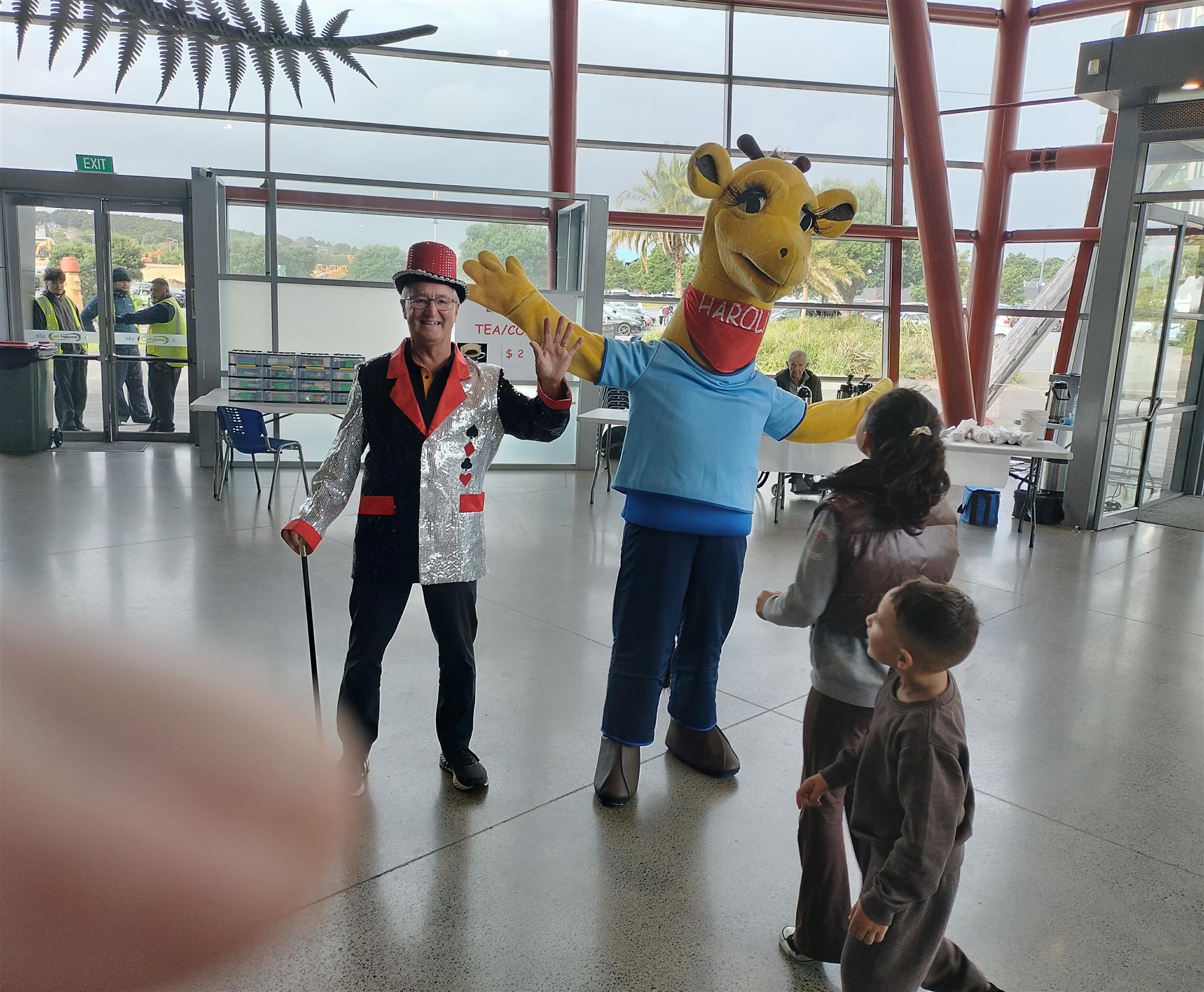
And thanks to our friend Assid, alias Harold the Giraffe, who was there all day, dancing, doing high fives with the kids, and having his photo taken with the adoring kids.
The only downside was poor Karen Monk slipping on the grass and falling heavily. She spent much of the night at Middlemore Hospital having her broken arm plastered and checking for other injuries. She was home by Sunday morning surrounded by family, and we wish her all the best and a speedy recovery.
Warwick
Co-President
Club News and Notices
Stewart Matthews
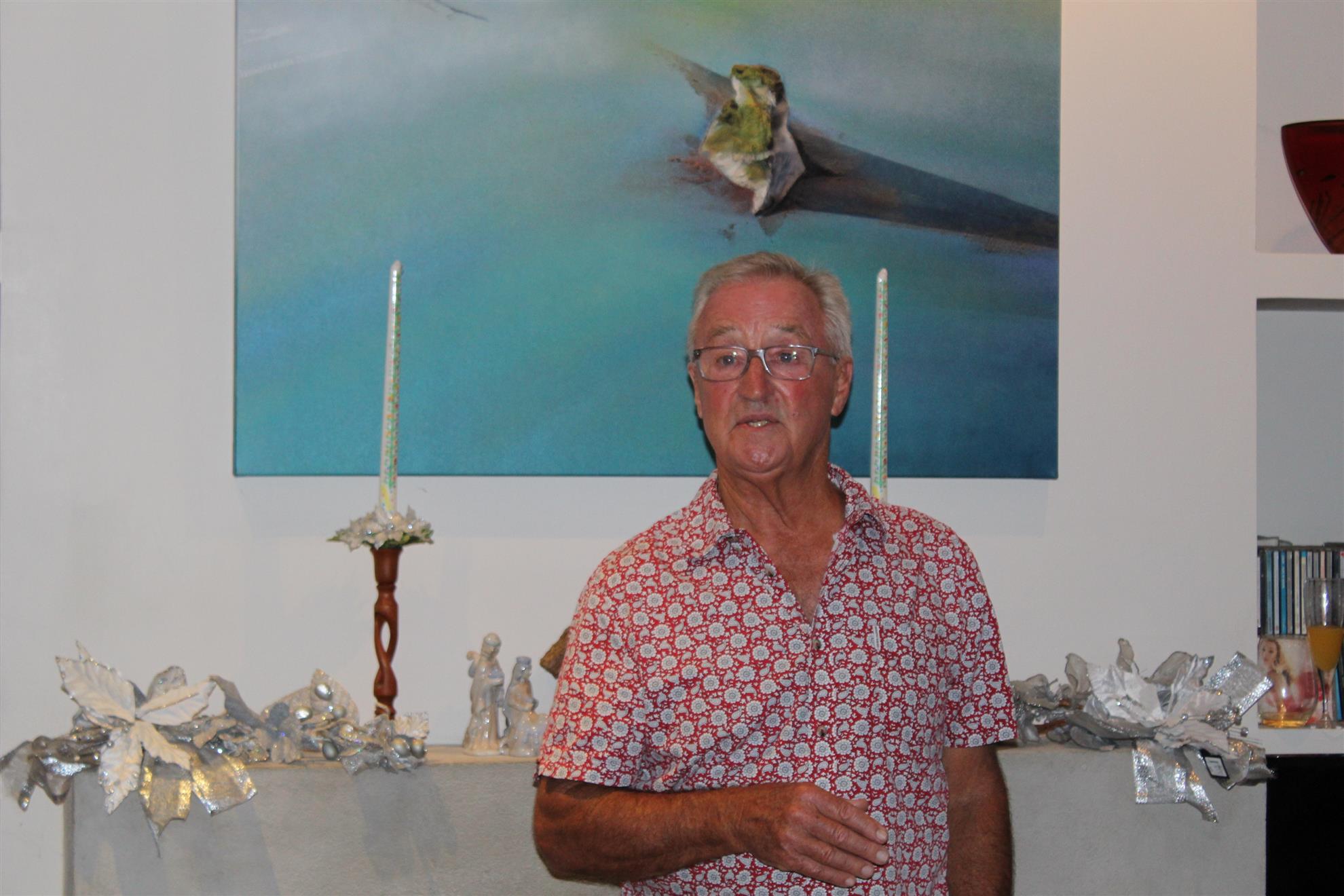
David Jack gave a eulogy for Stewart who died on 5 June 2026.
Stewart would have been delighted to have been at this meeting, particularly with so many young faces. Stewwartuart, sadly, died on Friday. He joined Penrose Rotary in 2004 so he was part of our Penrose organization for 20 years.
When we integrated with Newmarket, he took the decision to become an honorary member, but as an active member for Penrose, he would be especially remembered as a very humorous sergeant.
That's one of the positions we had for many years in those days, as well as a very generous member who never failed to take a table at a fundraising dinner, or to put a prize up of a lunch at the squadron, which he would chair, and then take everybody around and show them the America's Cup, and the various trophies.
His obituary described him as one of nature's characters, and he was very much that. Many of us came across Stuart in the mid 70s when we were cadets or young managers at AHI. He was an export manager for Fisher Roofing, as it was in those days, and so did a certain amount of travel into the Middle East. He also worked with a number of people like Lew Fisher, who sponsored, who built, actually, and the Spirit of Adventure, so it was no surprise that Stuart was also a keen yachty who was a crew on Fidelus. If you have a look, it was one of very sleek scoops slipped for crew by Jim Davin. He competed in the Sydney Hobart race.
There's a number of stories about Stuart, and a couple I'll just share briefly. One of them relates to one of the boats, I'm not sure whether it was for Dallas or not, heading off on Christmas Eve, either to the Bay of Islands race or across the Sydney Hobart, and Stuart went down to farewell the boat off, and next thing his wife, Alison, knew was there was a message to say sorry, the boat is under crewed he wouldn't be home for Christmas, if you wouldn't mind, he's crewing on a very important race, (editors note - it was probably a race to Kerikeri that the RNZYS used to run as Stewart would have had to have ducked accross to Australia to do the fairwelling!)
Stewart was very strong stalwart of Auckland Grammar. Within the Penrose club there were number of people who attended Kings College and a number who attended Auckland Grammar related, and soon as there was a rugby match, there would be much discussion.
Stewart was an export manager for AHI and travelled the world selling things. He was involved in Abu Dhabi back in the 1970s. Recently, he said to me, we just didn't understand what was required, so we pitched him off in a suit and white shirt and tie, and samples of Fischer roof and tiles and cramples of glass and aluminum cuttings, and so on, in a suitcase, and so he said most incongruous walking around the streets of Abu Dhabi, trying to sell his wares. He talked about trip one where he had an appointment with one of the Glassware distributors there, and all the signs were up at first level, and in a mixture of English and Arabic, and as he walked along, looking, trying to find the place of his appointment, that he tripped over a beggar in the street and fell into the pavement, which were all dirt, not ashpalt or anything like that, and so got his great white shirt covered in dust and everything, and eventually found the place, and arrived upstairs, and he said the purchaser felt so sorry for him. She, she gave him an order of a container over the Crown Crystal glass, which was fine until the next year, and it was had to be replenished, and so there was another order that had to be dispatched, and had to get in and organize that as a Rotarian.
He was really remembered for the zest he brought to us as sergeant. We had a particular scheme where we raised money by people bringing anybody that came back from overseas to buy a bottle of Rob from Duty Free, and present that as a prize, which was was raffled every year, every week to raise funds for us, and Stuart was the absolute organizer of the seller, in terms of bringing out bottles, and people always return them, so he had the whole litany, but probably the nicest bit was Stuart's stories, and the memory of him as sergeant was always getting up at the end reciting the various anniversaries for people who might remember them, or if they didn't, then they would be fined. Similarly, finding people we had an Australian, and if the Australians had lost a cricket, then they were fine. If kings had lost at rugby, then those guys were fine. And then Stewart would always finish, I mean, some rugby clubs finished by standing and having the national anthem, some have a prayer.
Stuart always had a story, and he would stand at the rostrum like this, and as I remember him, he would survey the room, and obviously he was working out were the females present, and he would then lick his lip and turn the page over if there was, and similarly he would do another scan, and if there were young people in the room, he would then flip the page over again until he got to, unfortunately, it was his routine sanitary joke, and we must have heard that every second month.
Vale Stewart
Rotary Newmarket needs you to help out with carparking at Mount Smart stadium.
Each game, this activity raises up to $2,000 for the club, or around $60,000 a year. This forms a major part of the funds for the club's youth programmes including RAP and RYPEN. Recently, Go Media Stadium has started blocking the road around the stadium when large crowds are expected meaning we need more volunteers, and the number of volunteers is beginning to fall below a sustainable level. Each game requires 8 volunteers, 3 at 23 Maurice Road and 5 at 5 Maurice Road. We don't expect you to show up every week, that would be silly. However, the more people who volunteer, the less of a commitment it is for each person and the more funds we can raise for the youth programs. You would be expected to arrive 2.5hours before the game starts and help with taking money via cash and EFTPOS and guiding drivers. Usually both parking lots are filled within two hours and after that almost everyone can go home. One or two volunteers would need to stay at 5 Maurice Road until an hour after the game to lock the gate. We'll provide safety vests and EFTPOS machines. We recommend bringing a water bottle. This crucial fundraiser can't continue to exist without your help, so please contact Shaun Peacock (email: shaun_peacock@windowslive.com Phone: 027 631 0065) to sign up.