
Rotary Club of Newmarket Meeting Report for 10th November 2026
Ryan Parkinson - Kitea Health & The World's Smallest Brain Pressure Sensor
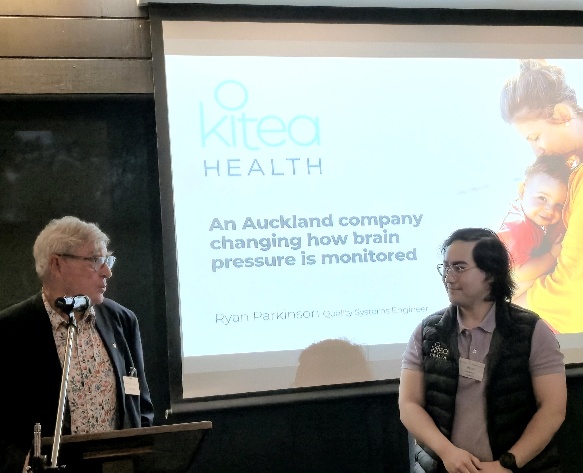
At our meeting, members enjoyed a fascinating and deeply inspiring presentation from Ryan Parkinson, Quality Systems Engineer at Auckland-based medical technology startup Kītea Health. Ryan, who is an alumnus of the RYLA Programme, shared the incredible story behind Kītea Health's pioneering work in implantable brain pressure monitoring.
Flying Blind: The Hydrocephalus Challenge
The presentation focused on hydrocephalus, a condition involving the dangerous buildup of cerebrospinal fluid in the brain. While it can be congenital or caused by car crashes and aging, treatment has relied heavily on standard plastic shunts developed in the 1950s.
These shunts carry a 50% failure and blockage rate within two years. Because shunt failure symptoms (such as dizziness, fatigue, or irritability) mimic everyday illnesses, patients and parents live in constant anxiety, often resulting in false-positive emergency room visits and unnecessary diagnostic scans. Until now, the only way to measure actual intracranial pressure was invasive surgery drilling into the skull.
The World's Smallest Brain Pressure Sensor
Founded 15 years in the making following a request from Starship Hospital paediatric neurosurgeon Dr. Peter Heaslip to Kītea CEO Simon Malpass, Kītea Health has developed a life-changing solution:
- The Implant: Completely untethered, biocompatible (made of titanium and borosilicate glass), and roughly the size of two grains of rice. It integrates seamlessly into existing brain surgeries in just 5 to 7 extra minutes.
- The Wand & App: A sleek, award-winning handheld wand uses wireless power transmission to safely activate the sensor through the skull, taking 500 pressure readings in 10 seconds. Data syncs directly via a smartphone app so clinicians and patients can monitor pressure trends in real-time from home.
Promising Trial Results and What Lies Ahead
Kītea Health's first-in-human trial at Auckland City Hospital has successfully enrolled over 20 patients—ranging from a 7-month-old infant to an 80-year-old adult—with a 100% procedural and diagnostic success rate. The technology is also shedding light on underdiagnosed conditions like Normal Pressure Hydrocephalus (NPH) in older adults, allowing doctors to precisely track mobility and cognitive recoveries when shunts are managed effectively.
Proudly backed by over $20 million in majority Kiwi funding, Kītea is preparing to expand clinical trials across New Zealand and Australia while pursuing an accelerated pathway toward US FDA approval. Looking forward, the team is also exploring cardiovascular and heart failure applications for their revolutionary sensors.
It was wonderful to welcome Ryan back to Rotary and witness firsthand the remarkable global impact originating right here in Auckland!
You can watch the full presentation on YouTube.