
Environment Awards
Boyne Drummond introduced the evening’s speakers, for the Club’s 75th Anniversary Hauraki Gulf Environment Award programme, associated with Auckland University.
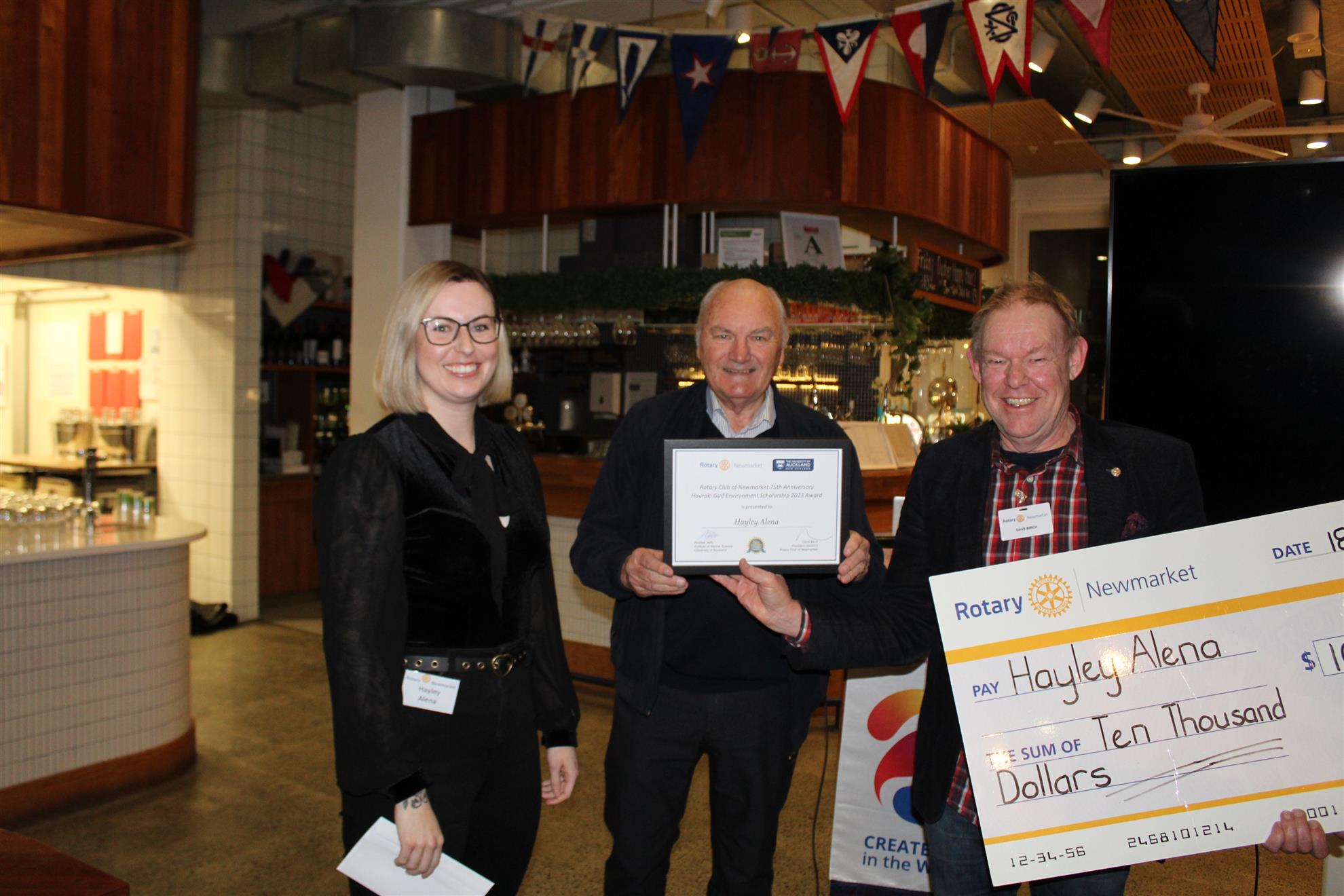 The 2023 Award was presented to Ph. D. student Hayley Alena. Her research aims to understand the effectiveness of skinks and geckos as seed dispersers in New Zealand. Recent global studies have highlighted the importance of fleshy fruit in the diets of lizards, particularly on islands. New Zealand is a global hotspot of reptile biodiversity, so seed dispersal by lizards may be more common here than elsewhere.
Offshore islands with high lizard abundances may be the only places left to study the natural role of lizards as seed dispersers. Hayley’s research is focused on Aotea/Great Barrier Island, which has 13 species of native lizards, nine of which are at risk of extinction, and one is threatened with extinction. 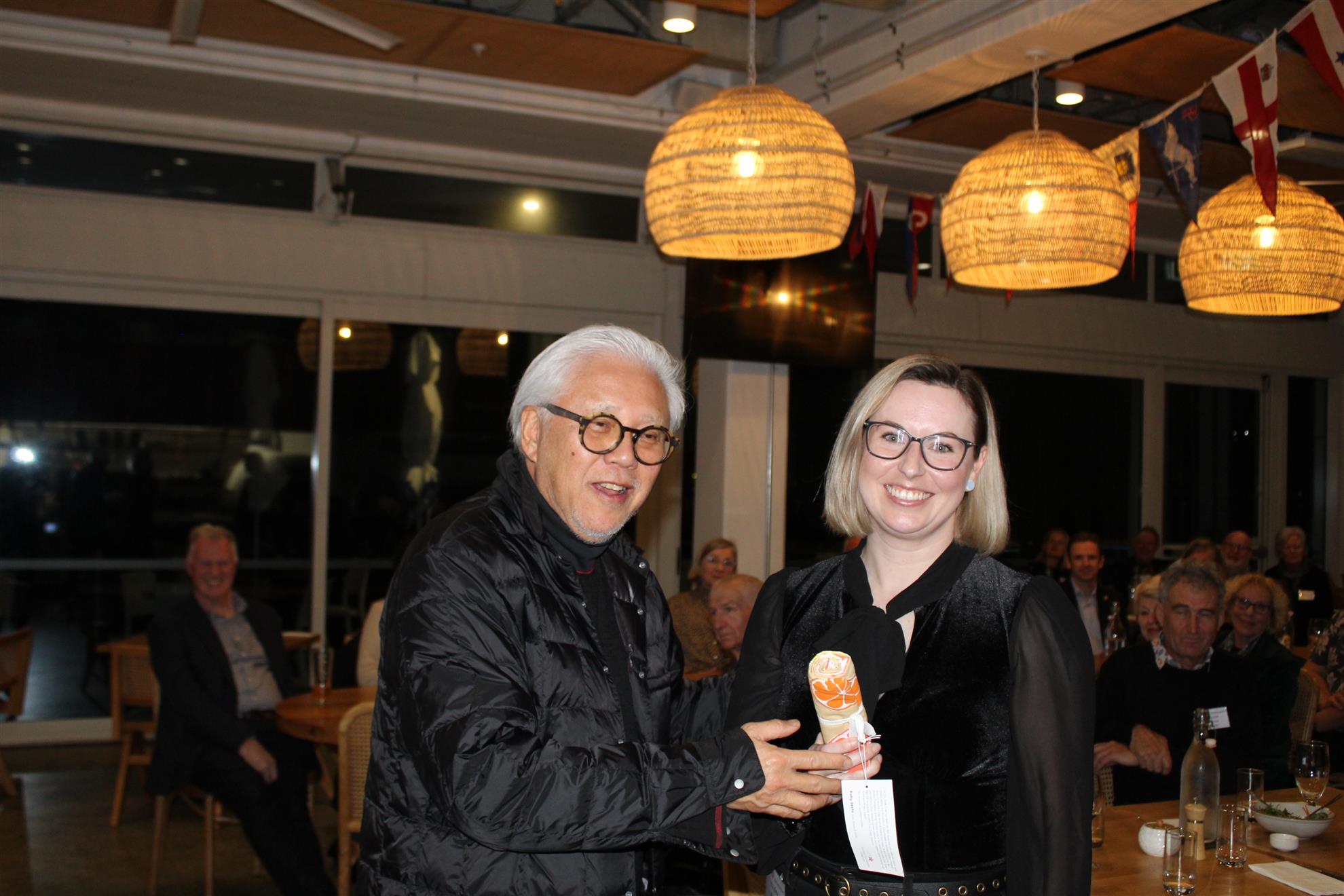
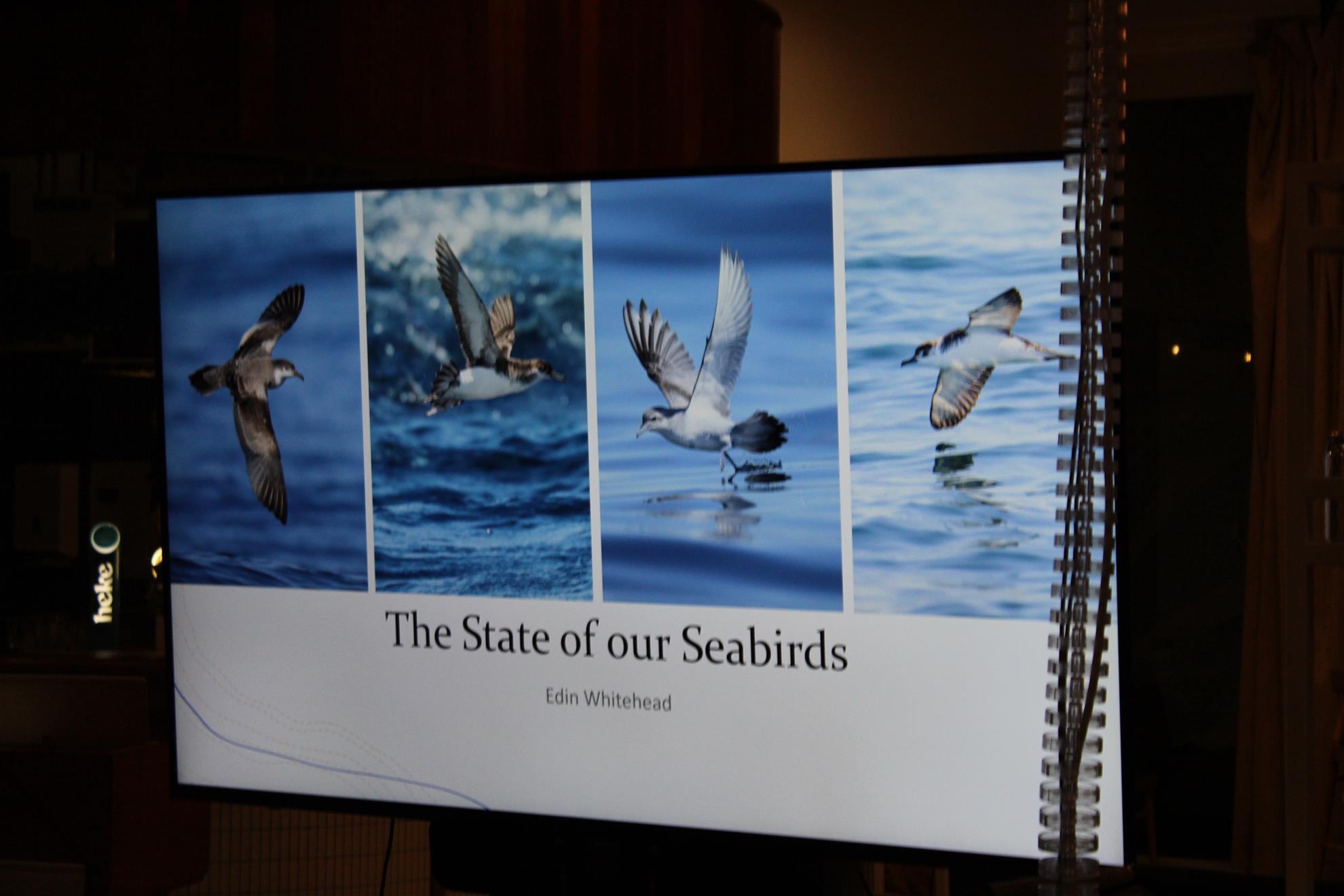 Edin Whitehead was the 2022 winner of the Rotary Club of Newmarket 75th Anniversary Hauraki Gulf Environment Award and in May submitted her Ph. D. thesis. Edin returned to update the club on the results of her research into the health of seabirds in the gulf.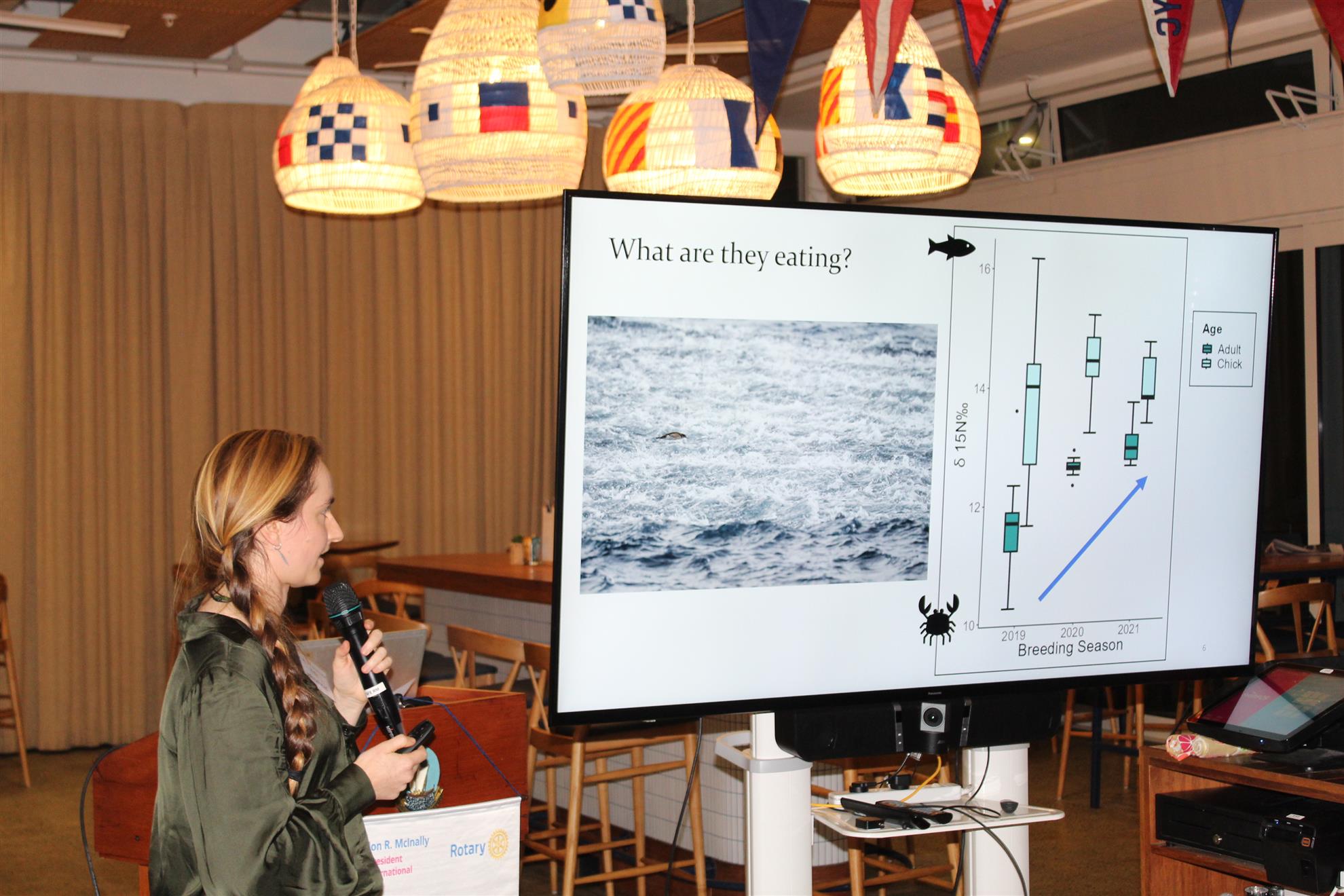
Understanding and ensuring seabird population health and recovery has flow-on effects for the entire ecosystem of the Hauraki Gulf, which is an international seabird hotspot hosting 27 breeding species. With RCON support Edin has been able to complete the stable isotope analysis work required to profile the health, diet, and behaviour of the species being studied. By understanding what pressures seabirds face and where they face them, we can target conservation efforts to the pressure points which elicit the greatest influence over population health.
Edin is a well-known wildlife photographer and works with the Northern NZ Seabird Trust. She remains passionate about
the importance of wider study of the gulf’s food resources.
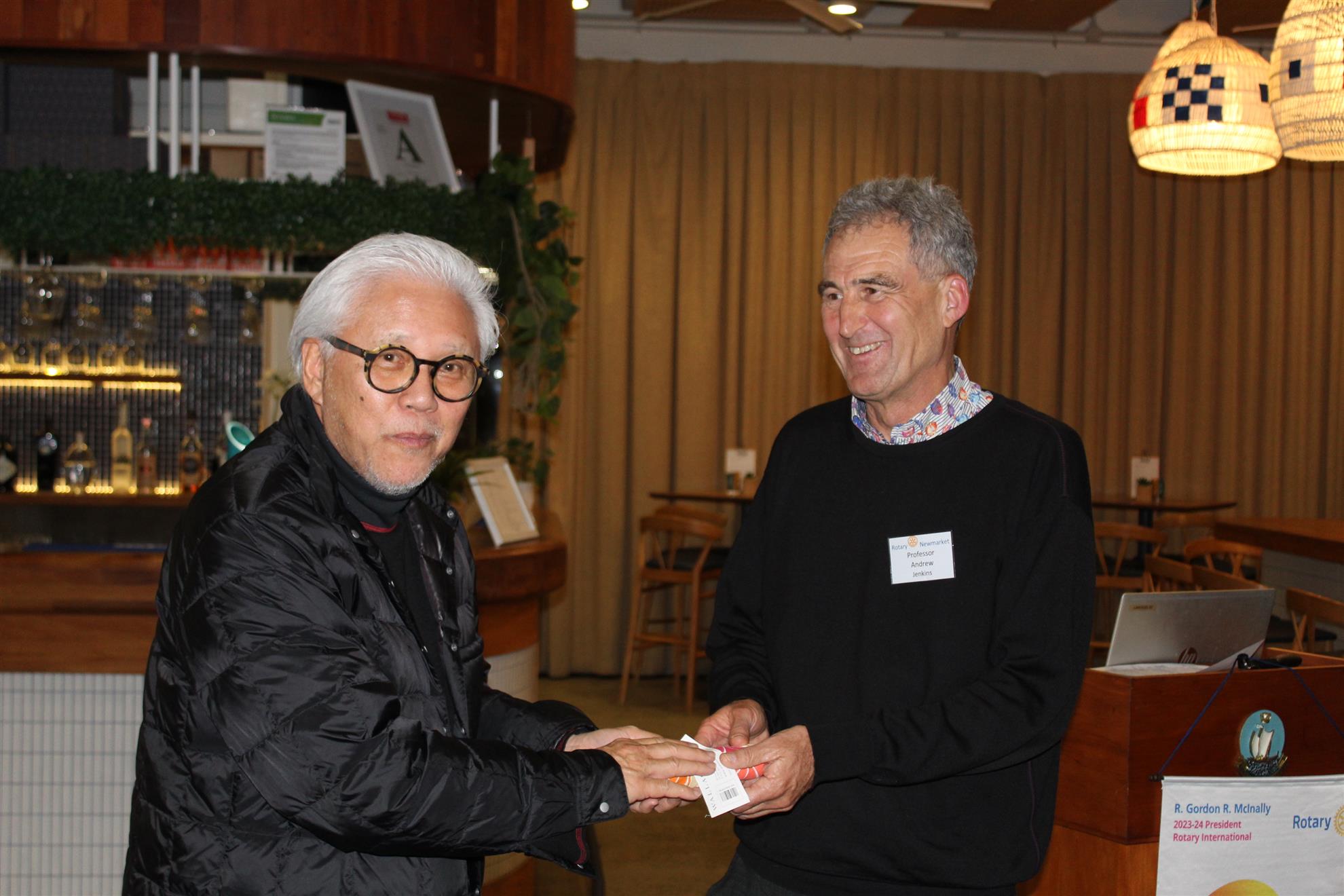 Andrew Jeffs is the Professor of Marine and Biological Sciences at the AU Institute of Marine Science. Andrew has been involved with the Rotary Club of Newmarket 75th Anniversary Hauraki Gulf Environment Award since the awards were initiated [2021: Sophie Robert’s study of mussel beds]. He and his colleagues advertise the award to students at the university and conduct the interviews to select the short list of candidates. Boyne paid tribute to the involvement of club member John Graham [who was unable to be present] with the Award and in the selection process.
Andrew gave us an overview of environment projects that are happening in the gulf. He emphasised the uniqueness of the gulf and its productive ecosystem. He updated us on the progress of the mussel project in the Orakei Basin; the reduction in speed of shipping to protect the slower-moving minke whales; kina and kelp protection; and assistance for the little blue penguins. He also gave an overview of the issues around the management of the Hauraki Gulf and proposals to manage the gulf in the future.
There was vigorous questioning of all three speakers.
Ron Seeto thanked each of the speakers individually, presenting them [Ron doing this for the first time] with Ruby Seeto Starship tea towels.
The Club’s warm appreciation to Boyne and John for their liaison work with AU and Professor Andrew Jeffs, the ongoing management of the Awards and the selection of such outstanding candidates.