
Kate Lockton
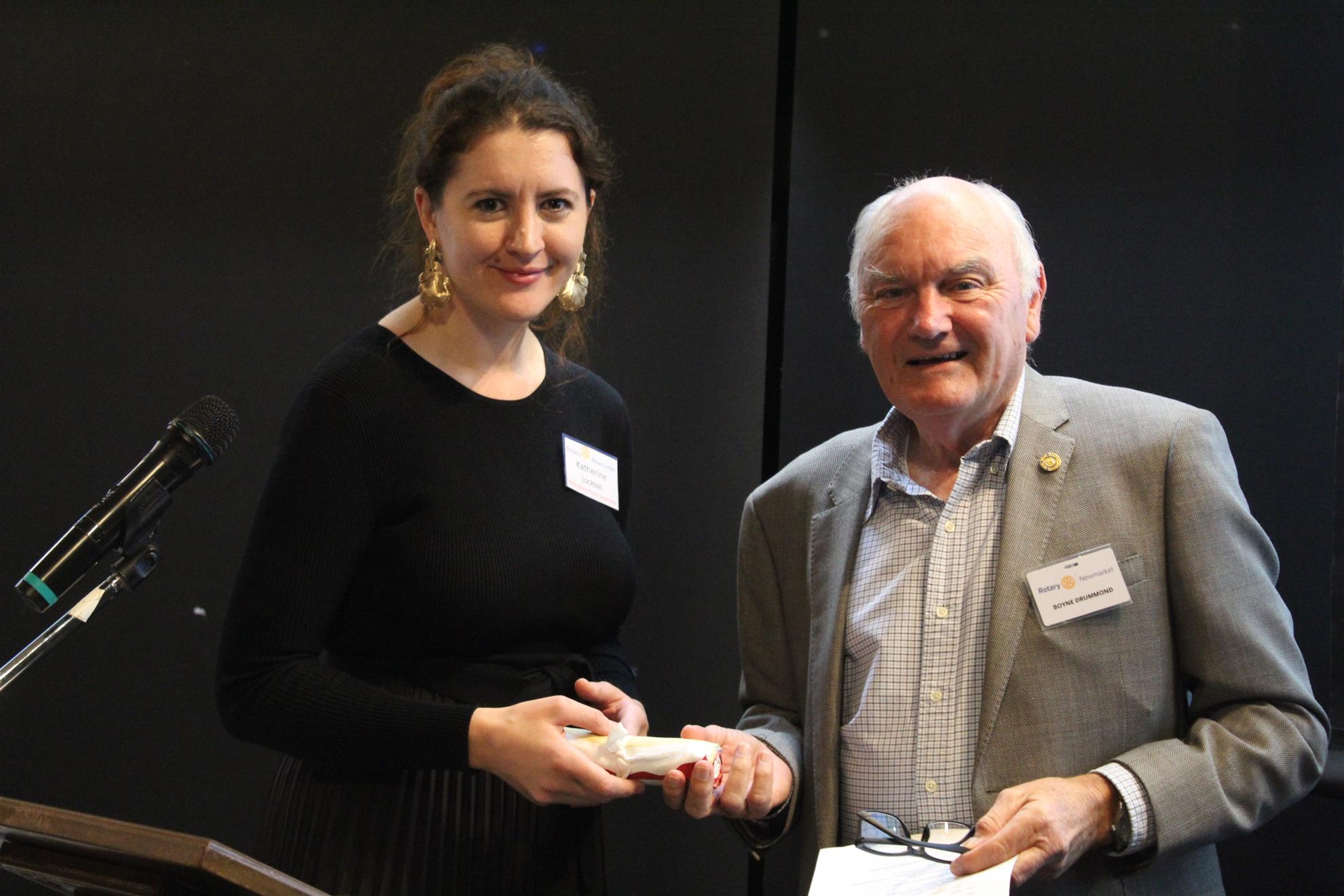
Kate was last years awardee of the Rotary Club of Newmarket Environment Award.
She spoke to us about Milky-White Flesh Syndrome in Snapper.
The syndrome is the focus her PhD research.
The condition is predominantly found in the Hauraki Gulf and affects the appearance and health of snapper.
She pointed out the physical differences between healthy and affected fish, noting the white and mushy flesh of affected fish in comparison to the translucent and healthy appearance of the healthy fish.
Kate showed us a visual comparison of three snapper fish, ranging from severe Milky White flesh to healthy.
The affected fish are noted to be significantly skinnier and have reduced gonads, indicating reproductive issues.
Nutritional differences between affected and healthy fish were identified, with affected fish having lower levels of carbohydrates and lipids.
Kate said she was collecting blood samples to identify markers between healthy and affected fish, which will aid in aquarium recovery work.
Kate explained the importance of nutritional analysis, having collected 100 snapper tissue samples to build a nutritional profile.
Affected fish were found to have lower levels of carbohydrates and lipids compared to healthy ones. Blood collection is seen as a crucial step in identifying markers between healthy and affected fish.
The blood samples will be used to measure conditions and assess improvements during aquarium recovery work.
Kate outlined the goals of aquarium recovery work, which involves catching live animals and observing them in aquaria for two months. The aim is to improve the condition of affected fish through nutritional means and to measure improvements using blood tests.
Kate concluded by thanking those involved in her research and for their support;
Karla Butcher•
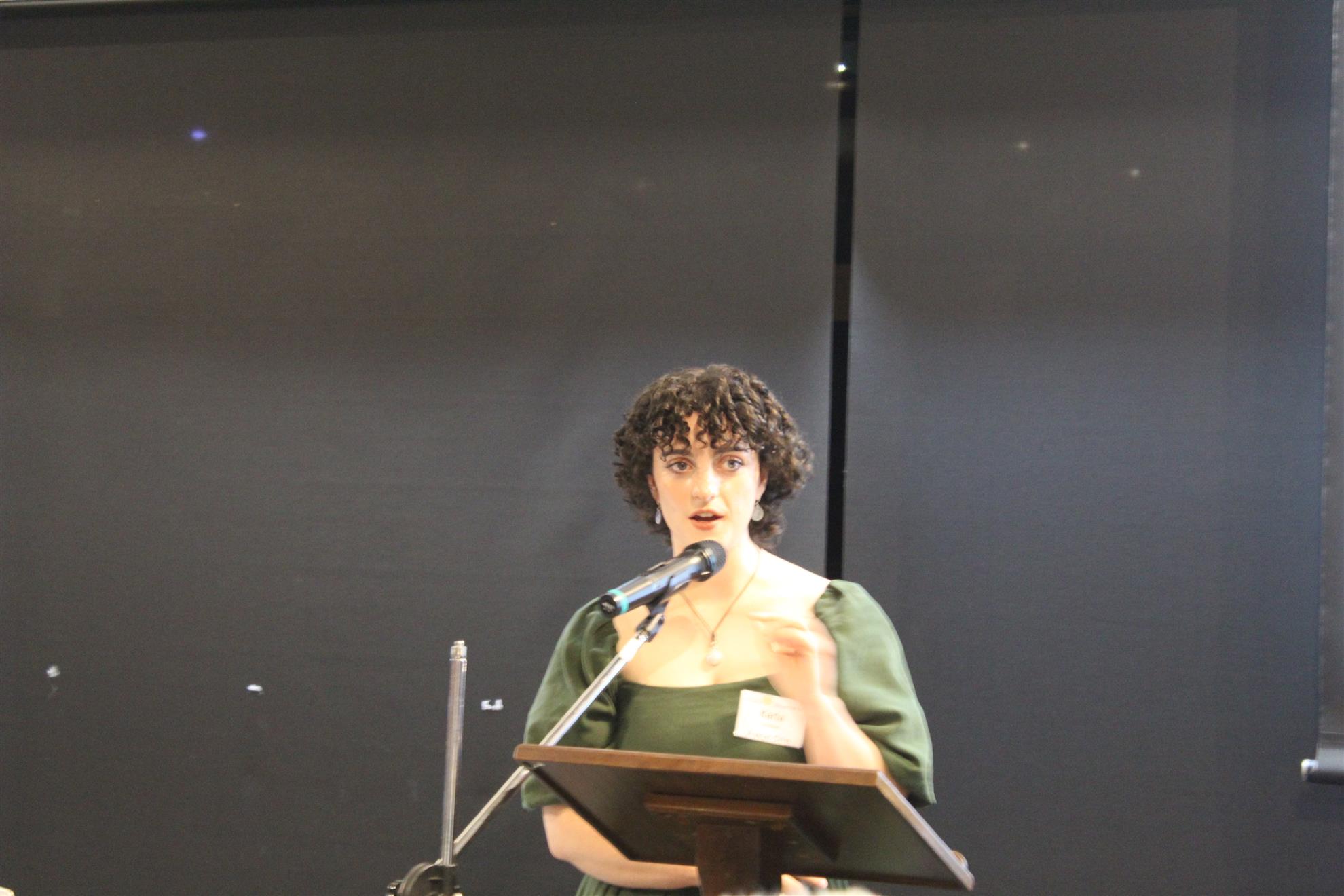
John Graham introduced Carla Butcher this years awardee of the Rotary Club of Newmarket Environment Award. He highlightedng her qualifications, research experience, and current master's study in biosecurity and conservation at Auckland University.
Karla spoke to her master's research on regional biosecurity for the Hauraki Gulf, focusing on potting mix and potted plants.
She thanked her supervisors for their support and outlined the structure of her address, including the importance of regional biosecurity and the methods she will use.
Karla explains the concept of invasive species and the importance of preventing species introductions, as eradication is more difficult and costly. She went on to tell us about the process of species arrival, establishment, and spread, and the role of vectors and pathways in introducing non-indigenous species.
Karla discussed the national biosecurity measures in New Zealand, emphasizing the role of the Ministry of Primary Industries in preventing international species introductions. She highlighted the importance of regional councils and the Department of Conservation in managing regional spread once species have arrived.
Karla went on to describe examples of the impact of invasive species on native ecosystems, such as the Hihi and Kokako native songbirds and sea birds that nest in burrows. She explained the high risk of biological invasions from increased plantings, particularly through the use of potting mix and soil, which can transport invasive species.
Karla outlined her methods for assessing the risk to the Hauraki Gulf, including molecular ecology techniques like DNA.
She explained the concept of propagule pressure, which includes the number of individuals arriving, the frequency of invasion events, and the physiological condition of the species. She also discussed the importance of restoration plantings in creating healthy ecosystems but also the risk of introducing invasive species.
Karla provided examples of invasive species found in nurseries, such as big mats of weeds, spiders, and plague skinks, and the role of Auckland Council in managing these risks.
Karla described Auckland Council's plant pass system, which is a voluntary program for nurseries to be registered and follow biosecurity protocols. She explained the pest-free operator program for transporting plants and the challenges of ensuring compliance.
Karla highlighted the issue of invasive species found in plant pass nurseries and the need for better monitoring and data collection. She then went on to outline her research plan, including sampling potting mix and plants from various locations, and the use of eDNA to identify invasive species.
Karla discussed the challenges of testing the assumption that potting mix is sterile and the need for thorough checks on bulk plants. She described examples of her research sites and the importance of sampling from both mainland and offshore islands.
Karla told us of her mobile lab and the process of taking eDNA samples from potting mix and then commented on the implications of her research for Auckland Council and the broader biosecurity efforts in New Zealand.
At the conclusion of her address the Karla was thanked for her presentation and then officialy received the club's environment award from Boyne Drummond and President John Hawke.