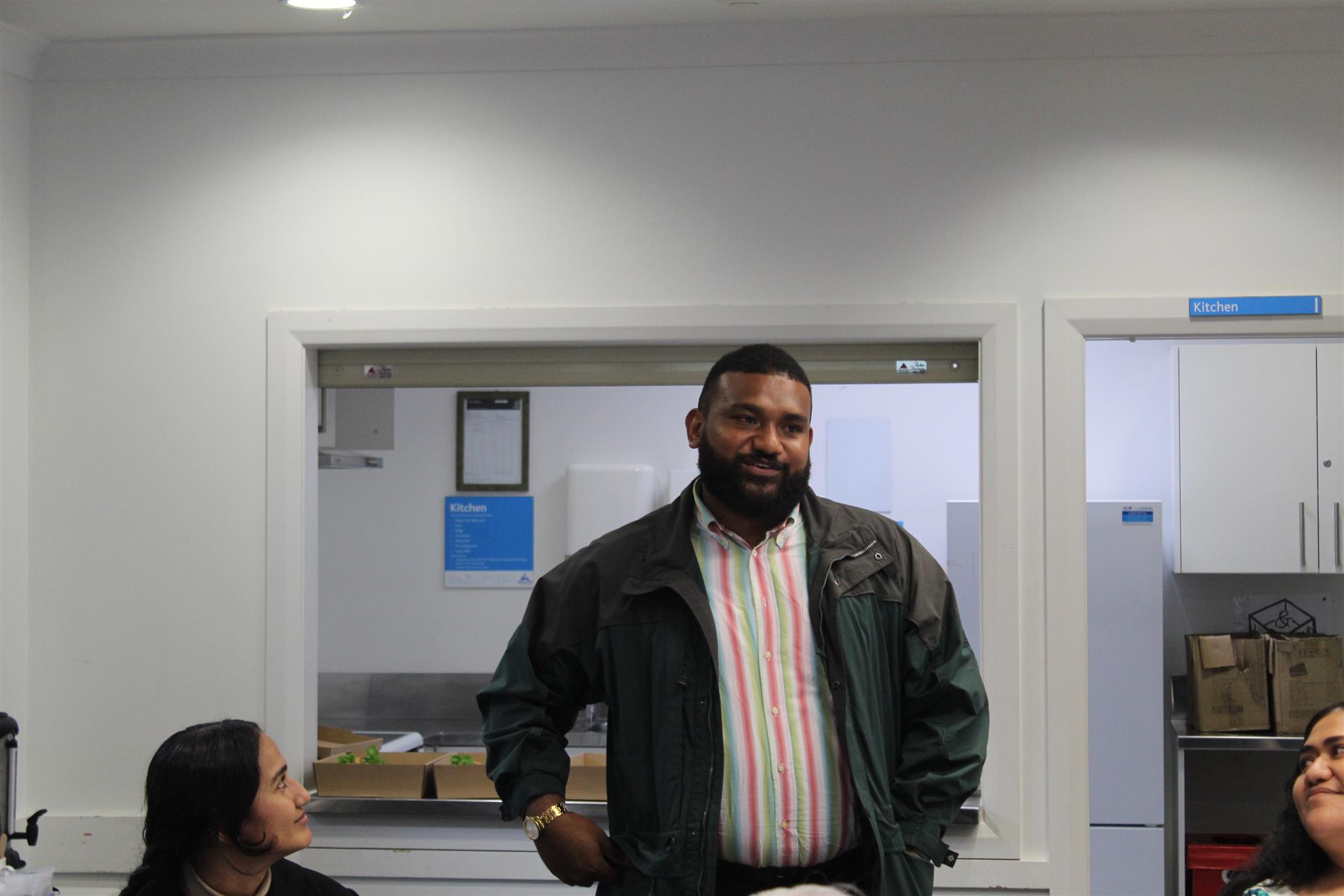
Dr Stephen Rainbow
Chief Human Rights Commissioner.

Our Speaker at Tuesday's meeting was Dr Stephen Rainbow - the Chief Human Rights Commissioner.
Stephen began his address by emphasizing the importance of human rights, referencing the Hebrew Bible and St. Paul's teachings as foundational to modern human rights. He went on to comment that the Universal Declaration of Human Rights in 1948 is highlighted as a pivotal moment, underpinning the United Nations' modus operandi post-World War II.
He noted the creation of the UN in 1948 is placed in the context of post-World War II devastation, emphasizing the need for human rights to prevent another holocaust and resist totalitarian regimes.
Stephen then turned to the development of Human Rights legislation in New Zealand by talking about the Bill of Rights Act and the Human Rights Act, noting their focus on individual freedoms and anti-discrimination respectively.
Stephen stressed the importance of upholding human rights in a polarized world and made the call for human rights to be relevant to all New Zealanders.
Stephen then noted the post-World War II international system and its challenges, including the UN's inclusion of regimes like Iran. He noted need for domestic upholding of human rights as the international system becomes less reliable.
Stephen then commented on the• challenges to Human Rights in a Polarized World. He mentioned the growing divisions and polarization within liberal democracies, using the UK as an example. He highlighted the trend of people supporting strong leaders and the willingness to deny human rights to those with differing views. Likewise he highlighted the importance of human rights in re-establishing a shared sense of values and common ground.
Stephen moved on to talk about the Role of Human Rights in Democracy. He mentioned the 50th anniversary of the Human Rights Commission and the need for a national discussion on shared values. He commented on the challenges posed by new technologies, such as facial recognition, and the need for human rights to address these challenges.
Stephen emphasised the importance of democracy in upholding human rights is emphasized, with a call for institutions to perform effectively. He also noted the need for difficult conversations around contentious issues and the role of the Human Rights Commission in facilitating these discussions.
Stephen then gave us examples of Human Rights Successes which include the 1986 homosexual law reform and the Equal Pay Act. He emphasised the need to celebrate these successes and recognize the real impact of human rights on people's lives. He reiterated the point of the importance of human rights in contributing to a renewed sense of common ground and shared values.
Stephen then◦concluded by thanking us and encouraged us to celebrate the freedoms that we enjoy and to fight to preserve them.
In the questions that followed Stephen talked about the impact of AI Policy and Human Rights. He noted that the government adopts a hands‑off stance, viewing AI as economically beneficial but the Human Rights Commission is seeking concrete actions to mitigate AI risks.
He then noted that human rights debates arise when strong leaders threaten others’ rights, exemplified by the U.S. president’s actions.
Stephen urged us to focus on protecting individual freedoms at home amid global democratic backsliding. He commented tha the biggest threat to human rights in New Zealand is the erosion of faith in democracy and tolerance, requiring renewed dialogue across political spectra.


Come join us for a club meeting
Auckland, 1051
New Zealand