Robert Blanch/Brian McMath
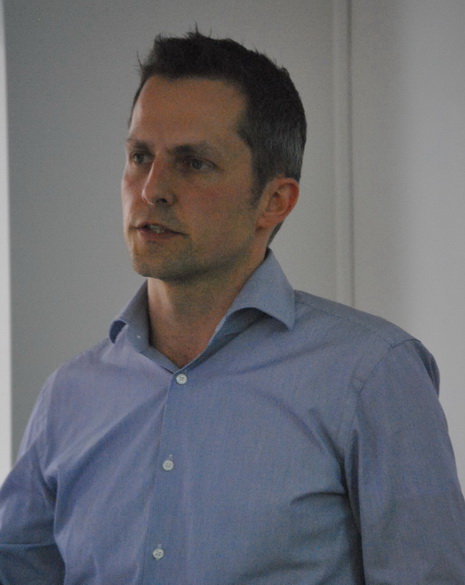
Robert and Brian gave us a short address on the product accelerator, a model developed by the University to actively engage with industry to promote and deliver growth for industry by promoting collaboration
between science and technology.
The point of the exercise is to identify opportunities to commercialize research projects for the benefit of all.
2 examples of the collaborative exercise were offered first the construction of racing bikes a project partnered with Avanti. Bikes were custom-built using 3-D printing technology for individual cyclists participating in the recent Olympic games at Rio de Janeiro. Gone are the days of simply taking a bike off a rack and hopping on for the elite athlete. Now bikes are built to meet their physical requirements so they are truly one-off machines.
The 2nd example used by Robert was the manufacture of spare parts for air New Zealand. Instead of maintaining large inventories of parts for their aircraft it is now possible to manufacture spare parts, for example replacement tray tables, using 3-D technology.
It is likely that other parts will similarly be manufactured as time progresses. The implications for industry are enormous. Inventory requirements will change dramatically.
Rotary Newmarket Technology Translation Award
The final part of the meeting involved presentation of the Rotary Newmarket Technology Translation Award. The judges were Prof Mark Taylor, director of the New Zealand product accelerator associate Prof Mark Jones and Brian McMath.
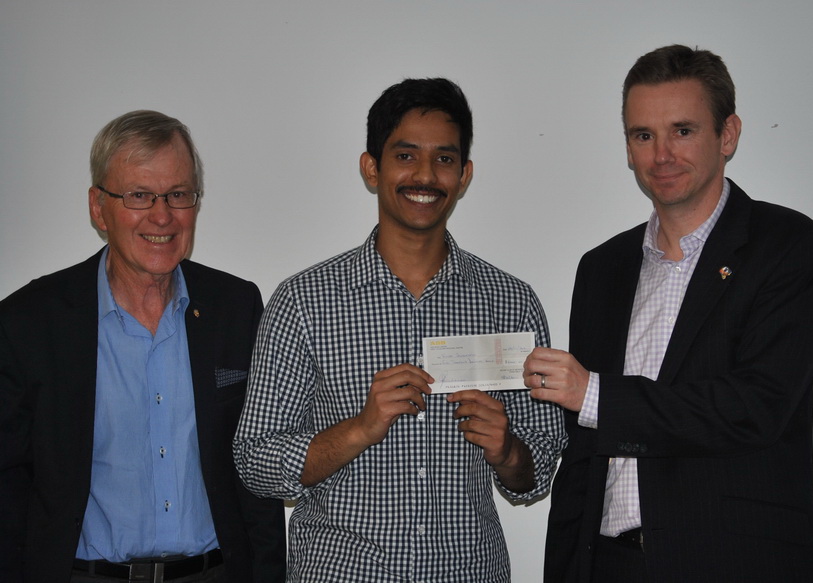
There were 26 candidates for the award. The winner was Vinura Jayaneththi a PhD student in the School of engineering.
His project is the development of 3-D printed nonbiological organs using smart materials. The purpose is to use these organs for transplant purposes. The project is wide ranging drawing upon medical science
engineering science the use of new materials including magnetic polymers and medical ethics.
Using such things as magnetic polymers, which your reporter did not know exist, materials can be created that respond to magnetic impulses and do not require moving parts wires or similar to make them work.
Vinura’s project is looking at the application of magnetic polymers as a remedy for bladder weakness. The project proposes creating a “patch” to be applied to bladder to prevent or eliminate the weakness that appears as people age.
3-D printing is being used to create 3-D models of organs to enable surgeons to work out how to undertake surgery and tricky cases.
The project is facing a number of challenges, magnetic/wireless connectivity, safety for humans, how long the material can last in the human body, and not least the ethical minefield the project faces.
This is an interesting project and merits the award.
Tuesdays meeting was a fascinating meeting and all members present were clearly interested in what was presented.

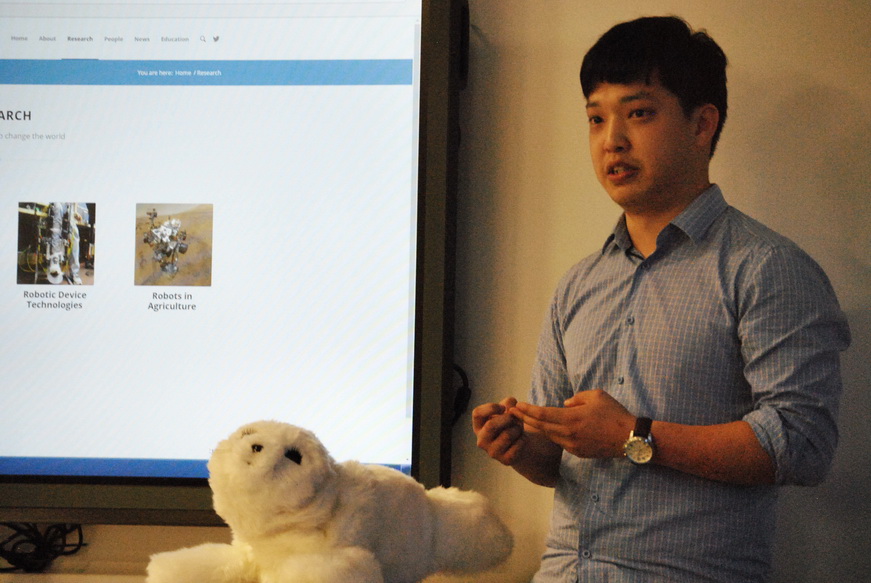
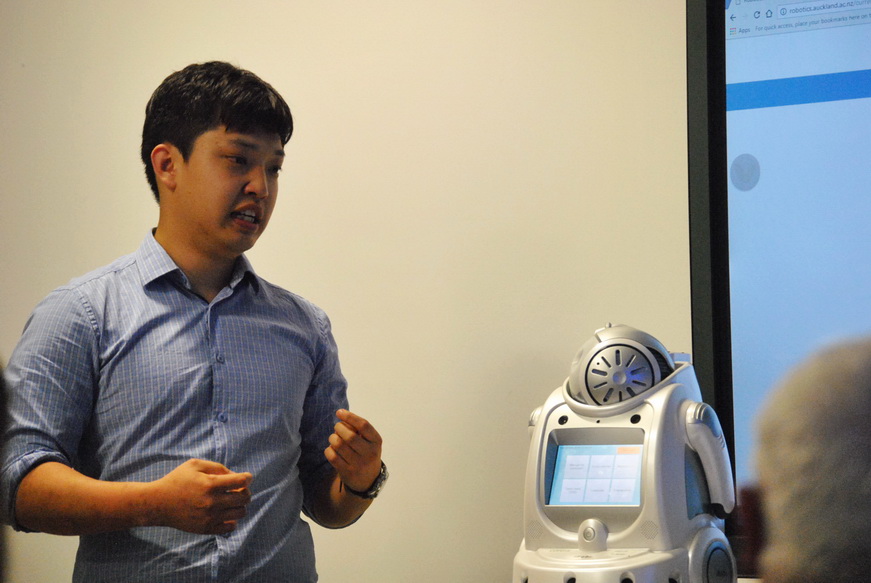 Chris told us that using the robots appears to have brought positive responses although the results of those experiments are being analysed.